
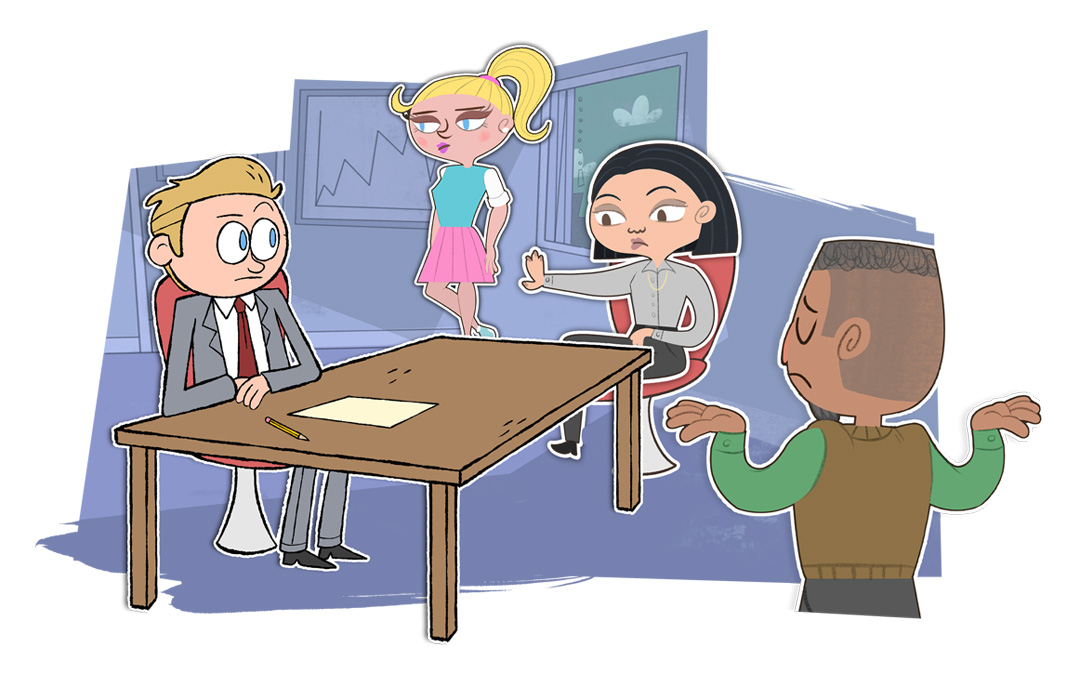
I gave a keynote on fostering accountability to a group of global leaders in Seattle last week. Someone asked a question that got me a little spicy. “Why aren’t people paying attention in meetings?”
Fair question.
These leaders are frustrated that when they assemble people for a meeting, there are folks looking at their phones, staring blankly out the windows, or turning their cameras off (for shame!).
The problem is that leaders find it easy to get mad about this behavior and hard to get curious.
Consider for a moment why people might be “elsewhere” while you’re trying to conduct a meeting.
What’s Going on Outside the Meeting
There are a bagillion different reasons why what’s going on outside the room is more captivating than what’s going on inside. I’ll start the list; you let me know what I’ve missed.
- A looming deadline
- A scary person who’s waiting for something
- A weighty decision
- An inbox with 726 messages
- Notifications coming in from a Slack channel
- A sick family member, a flooded basement, or a kid struggling to fit in
- A hilarious meme a friend just texted (hard to compete with that during a budget review.)
There are so many draws on people’s attention from outside the meeting room.
Meanwhile…in the Meeting
Now, let’s compare that to what’s going on in the meeting and see whether it can compete with the external demands.
Possibility #1: Your meeting is an efficient and effective forum for well-prepared people to debate mission-critical topics and to align around actions that will make a meaningful difference for your organization.
If that’s the case, I bet most people would be paying attention.
Possibility #2: Your meeting is filled with:
- A series of presentations and talking heads
- Repetition from another version of essentially the same content
- Topics that aren’t pertinent to the individual
- Long stretches of dialogue between the boss and one person
- Conversations that get into the weeds beyond most people’s understanding or interest
- Interpersonal dynamics that feel intimidating (or demoralizing)
- Pastries you could hammer a nail with
How compelling is the content of your meeting? And how does it stack up to the other cognitive demands, emotional burdens, and places to expend energy your participants are dealing with?
Thoughtload is a Tax You Can’t Ignore
The issue is that the people in your meeting are carrying a heavy thoughtload, and your meeting is just one more thing to dilute their attention, one more opportunity for them to feel anxious about accountability, or slighted by offhand remarks, or inadequate because they can’t keep up. And all that is one more drain on their already depleted energy reserves.
If the people in your meeting are overwhelmed by high thoughtload, there’s little chance they will be creative, collaborative, or even present.
If you want people to pay attention in your meetings…
Ask Yourself
- Is this meeting the best use of people’s time and energy right now?
- How could I make it more relevant, more effective, and more interesting?
- How could I make it shorter, smaller, and more focused?
- What do I need to do before the meeting to offload people’s thoughtload so they can focus?
- What signs should I watch for that indicate I’m losing the battle with thoughtload and need to course-correct during a meeting?
- What ice breaker, mindset shifter, or ritual could I use to start the meeting in a way that supports people in being fully present. Here’s one I really like: