
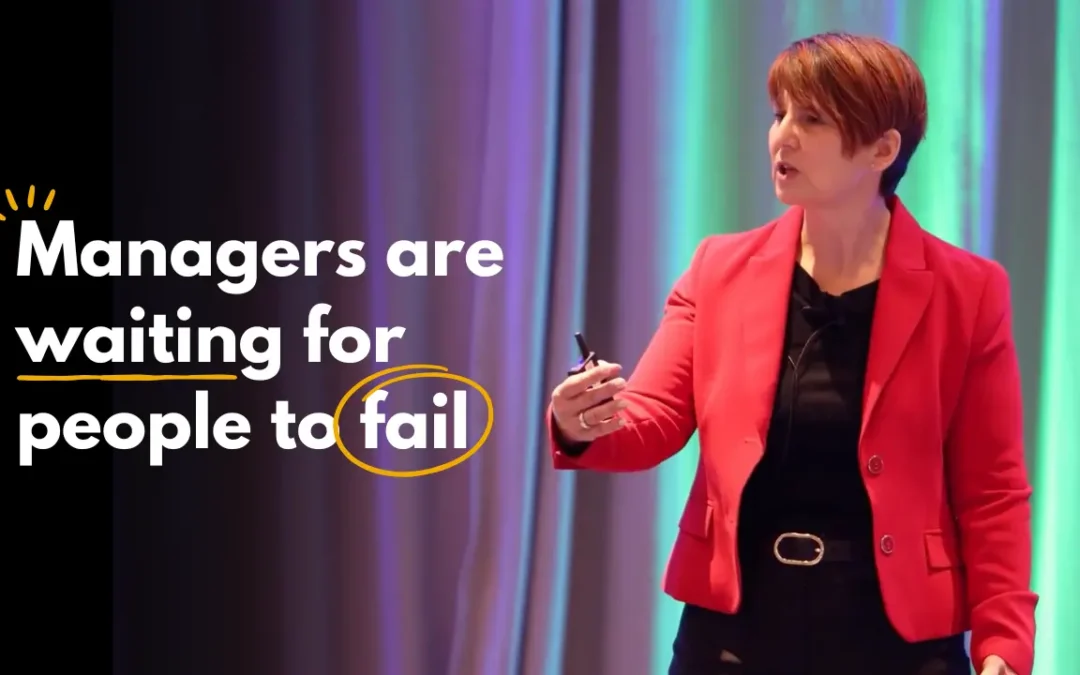
We need to shift the balance back to having more accountability, but not by going to toxic, antiquated, out-of-date versions of accountability. When I hear this language and these types of expressions, it says that managers are waiting for people to fail instead of positioning them to succeed. And that feels awful.
These are some examples of toxic accountability I hear on a regular basis:
“I’m going to hold you accountable for that.”
As soon as I hear that language, I imagine somebody in handcuffs. “You’re not going anywhere until you deliver this for me.” That doesn’t sound like a very empathetic, empowering, engaging kind of language.
“Well, who’s on the hook for this?”
Again, this isn’t a great visual. Who wants to be on the hook or flapping around at the bottom of the boat? Not me.
And there’s one that’s worse. A show of hands, if you have heard this because I don’t go a month without hearing a leader use this expression:
“Tell me, who’s the one throat to choke?”
Let’s be clear: Leaders love catchy phrases. Somehow, this one has spread among leadership teams: “Tell me: Who’s the one throat to choke?”
If you haven’t heard that — thank God! That’s a good sign.
–
Yes, we need to get back to heightened accountability. Yes, we need to get the productivity needle going in the right direction. We need all those things, but not like this. Not through toxic forms of accountability.
How to Show That You’re Accountable