
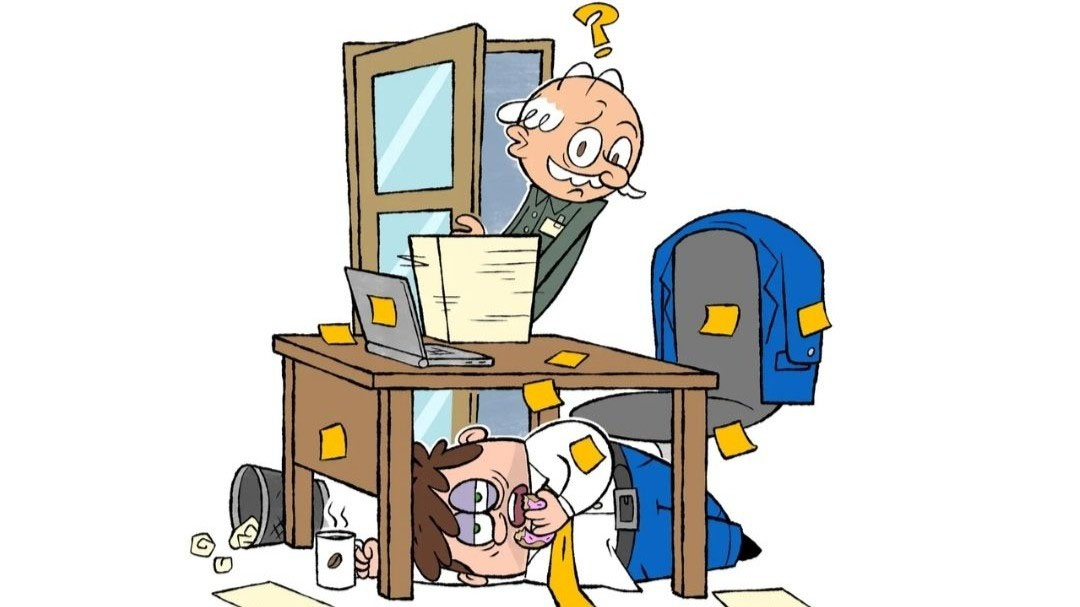
I get the sense (mostly from people looking utterly exhausted) that too many people are trying to sprint a marathon. I’m hyper-sensitized to this pacing issue at the moment because Craig is a week away from running a marathon and reminding himself (again) not to go out too fast.
As my husband settles on the right pace to go 26.2 miles, I’m realizing I’ve been sprinting for several months for this book launch, and it’s probably time to slow down.
Let’s talk about what it means to sprint a marathon, the warning signs that you’ve set an unsustainable pace, and how to get into a groove you can maintain over the long haul. Sound good?
Sprint Mode
When I say, “sprint mode,” what do you picture? Maybe more importantly, what do you feel? For me, sprinting is going all out; putting everything you’ve got into going as fast as possible. In sprint mode, you’re looking straight down the lane, oblivious to what’s going on around you other than a vague sense from your peripheral vision that someone might be gaining on you. It’s an intense, breathless dash for the finish line.
In work terms, sprint mode is when you start your workday while drinking your morning coffee, skip lunch to cram in a few extra minutes of activity, and bring work home on evenings and weekends. It’s frenetic.
More than that, sprint mode means a focus on producing as much as possible as quickly as possible, often with greater emphasis on transmit than receive. Sprint mode is expedient.
Sprint mode is optimized for getting one thing done with tremendous efficiency. It’s suboptimized for almost everything else.
Warning Signs
Are you wondering if sprint mode is failing you? Consider these dimensions…
A) Are you reaching the point of physical, mental, or emotional exhaustion? Is it getting harder to get out of bed in the morning? Are you struggling to pay attention? Are you dozing off on the couch in the evenings? Have you started skipping discretionary activities you used to enjoy? That might be the evidence that you’ve been sprinting too long.
B) Is the quality of your work suffering? Is your output becoming less creative, less novel, more vanilla? Are you outsourcing your thinking to A.I. and failing to process ideas deeply or add judgment to what it’s delivering? Have other priorities slipped for too long? If your form is breaking down, you might need to stop sprinting.
C) Are you losing the crowd? Have people given up trying to keep up with you? Have you pissed people off by being so maniacally productive? Is the stress of your pace making you less patient, more irritable, less collaborative for your customers, colleagues, or community? If your speed is coming at a cost to your relationships, you might need to slow down.
This is by no means an exhaustive list. What other signs are you seeing that you might be trying to sprint a marathon and that approach might be failing you (and others)?
Get Into The Groove
There is an alternative to running full-out (although I appreciate that it often doesn’t feel that way in our organizations these days). The alternative is to find a pace, a cadence, a rhythm that is more sustainable, more holistic, and better optimized for going the distance.
Here are a few options to consider:
Slow it down. One option is to bring your pace down a little. That might mean starting your day a little later and ending it a little earlier. Slowing things down might mean producing fewer outputs in a given period. For me, I’m slowing the pace of marketing and promotion work (I was recording five or six podcasts a week throughout the book launch period) to wrestle back two mornings a week for thinking and writing.
Space it out. Another very helpful approach is to add a little more air into your calendar. This might mean adding space in your day to avoid the layering effect of back-to-back meetings. It might mean having one key deliverable each week rather than trying to multitask on multiple important projects at the same time.
Sprint and rest. Maybe you love to sprint and bristle at the idea of slowing down. No problem, just remember that sprinters run many heats to get to the podium. Consider what outcome you’re working toward and break it down into a series of sprints, each with a specific output. Plan, sprint, reflect, course correct, sprint again.
One note. After my extended book launch sprint, I was really exhausted. I took a lovely two-week vacation this summer hoping (expecting) that would do the trick to get me all refreshed and revitalized. The vacation was AMAZING, but it didn’t help at all with my experience of running too fast. In my experience, vacation time doesn’t solve the sprint problem; you need work time where you can go at a different pace: time to reflect, review, connect with people, process your thoughts and learnings. Catch your breath.
Ask Yourself
How can I stop sprinting the marathon?
- How is my energy level? Are my physical, mental, and emotional batteries fully charged, or are they running low?
- What urgency signals am I picking up from my environment? Are they legitimate?
- What is my expediency costing me in terms of decreased quality, dropped priorities, or reduced collaboration? What needs remediation?
- What options for resetting my pace make the most sense? Do I need to slow things down or keep running hard but add more breaks?
If things are really busy, urgent, and critical in your organization, I understand the compulsion to go as fast as you can. That said, you’ll be of no help to anyone if you go so hard and fast that you drop (or start making careless mistakes or alienating people). Consider how a more sustainable approach might lead to better results over the long haul.
Stop sprinting the marathon.
With you in the deep end,
Liane