
I love the “What? So What? Now What?” framework⁕. It’s a simple, punchy way to drive from issue to action.
I used this approach while facilitating a strategy session recently. As we worked through the agenda, I captured the takeaways in a three-column table with the headings: WHAT, SO WHAT. NOW WHAT.
Finding the What was easy. The Whats are topics like:
- AI adoption
- CES Vegas event
- New CHRO
The rest was harder.
As team members spoke, many moved directly from the What to the Now What. They went straight to solving.
I know, I know. Everybody’s using “sense of urgency” as their mantra these days. I should be glad they’re being Action Jacksons.
But leaving out the So What is problematic.
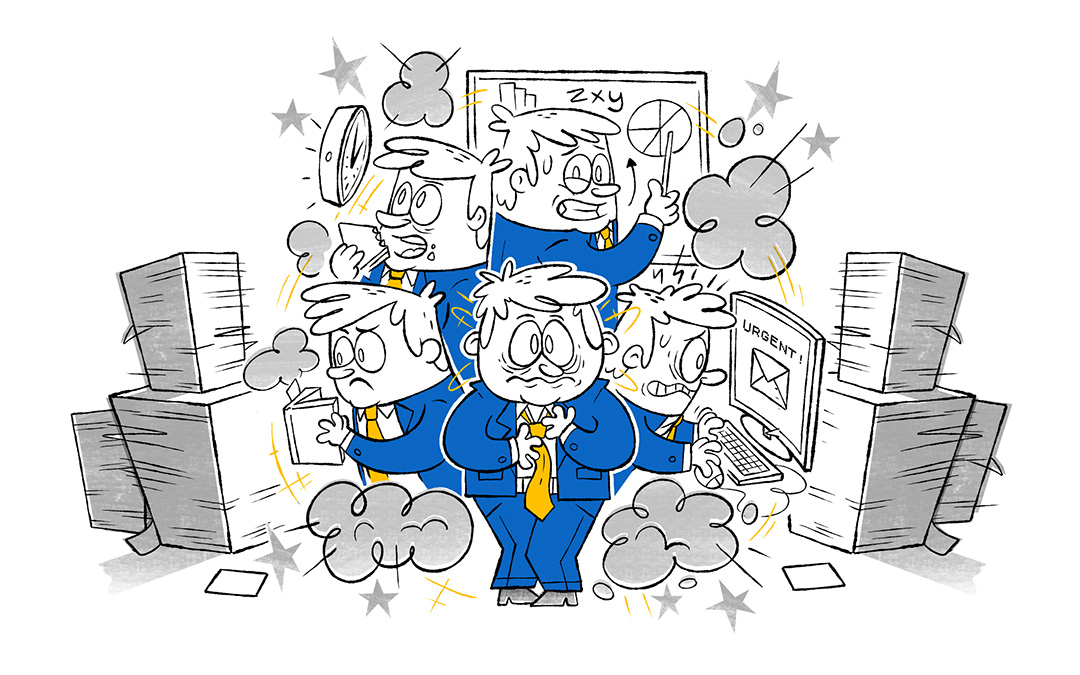
And I’m seeing this mistake more and more as people’s thoughtload increases.
Thoughtload Suffocates Insight
Quick reminder: thoughtload is the silent tax on your performance from the treacherous triad of high cognitive demands, heavy emotional burdens, and depleted energy reserves.
As I reflect on the costs of high thoughtload in our society and our workplaces, one of the most worrisome issues is that the more we struggle to carry the load, the less capacity, inclination, or ability we have to generate insight.
Instead, we’re relying on old scripts, habits, and defaults.
Old scripts, habits, and defaults will not be enough to get us through this era of disruption.
When we skip the So What, we miss the insights about why the thing is happening, the root causes, the impacts, the potential scenarios, and the options. We forego understanding, optionality, and agency.
This is what it sounds like when you skip the So What:
- Need more AI adoption: push out a sternly worded email that employees are expected to use AI.
- CES event coming up: get the booth out of storage and start emailing customers for meet-ups
- New CHRO: line up 737 back-to-back meetings, so they get to know everyone.
Insight Fuels Effectiveness
I get the sense of urgency and the push for productivity.
But productivity can be a trap. Sure, you can drive outputs and get lots done, but are those outputs moving the needle on the outcomes that matter?
Only when we focus on outcomes can we trade productivity for effectiveness.
Now What drives output. Now What drives productivity.
Only when we hit So What before Now What do we have a shot at effectiveness.
Give it a Try
Try using What? So What? Now What? as your mantra for the week.
Build out your set of So What questions, such as “Where will that have the greatest impact?” What would happen if we did nothing at all?” “What risks are we inviting?” “What levers do we have?”
Notice when you get into a meeting where everyone’s thoughtload seems too high to support insight. How can you create focus, calm the emotions, or inject some energy so the team can add greater value?
Don’t let your thoughtload get so heavy that you jump to solutions to the wrong problem.
⁕ I learned this from Karen Ward, CPHR, CEC, CPCC, after an introduction by 🇨🇦 Karen Wright, Master Coach. I’m so grateful to them both.
What I’m Reading
The Brain Never Sleeps — Karen van Kampen
If you’ve ever wondered why your dreams feel so vivid—and what they might be doing for your health—The Brain Never Sleeps is a fascinating tour through your sleeping mind. My friend, health and science journalist Karen van Kampen blends personal narrative with accessible neuroscience to show how our dreaming brains help us process emotions, boost learning, and spark creativity. It’s a compelling companion if you’re thinking about thoughtload and how your brain keeps working on your behalf even when you’re off the clock.
▸ Learn more: https://www.karenvankampen.com/books
What I’m Learning From
Overcoming Overwhelm — LinkedIn Live with Olympian Sarah Wells
This week I hosted a LinkedIn Live conversation with Olympian Sarah Wells Keynote Speaker, OLY about managing thoughtload to sustain elite performance. Sarah shared powerful stories from the track about how rest and recovery aren’t “nice‑to‑haves”; they’re non‑negotiables if you want to stay at the top of your game rather than flame out. If your instinct is to respond to overwhelm by pushing even harder, this conversation is a timely reminder that you can’t out‑hustle a depleted nervous system.
▸ Watch the replay: https://www.linkedin.com/posts/lianedavey_overcoming-overwhelm-activity-7430619929499955200-V0b1
With you in the deep end,
— Liane