
Hi!
It’s been a while.
I hit pause on the newsletter to reflect and be more deliberate about how I could best be of service. I didn’t come up with any great answers, but here’s one attempt at a new, snappier format. Let me know what you think.
Going Under
Smart, driven, ambitious people are in the deep end, and we’re struggling to keep our heads above water. It’s partly the cognitive demands: too much to pay attention to. It’s equally the emotional burdens: so many triggers. And it’s exacerbated by dwindling energy, motivation, and drive to keep treading water when the pace never lets up.
But the thing to do when you’re going under is to peel off all but the necessary layers in an effort to stay afloat. That’s not what’s happening. Even while we’re going under, people are taking on more.
What’s going on?
Fight, Flee, Freeze, or Fawn
Simply put: We’re scared.
And when we don’t feel safe, our brains sound the alarm and marshal some impressive resources in an effort to protect us.
You’ve heard the standard descriptions of your threat response options as fight or flight. Stand up and defend your ground (or to turn tail and run like the wind).
Those aren’t the only options. You’ve probably also heard (or felt) a third option: freeze. Do nothing. Pretend you didn’t hear. Who? Me?
Psychologists now recognize a fourth option: fawn.
Fawning is responding to a threat by appeasing, submitting, and deferring to power, like when Fido responds to Cujo at the dog park by rolling on his back and tucking his tail between his legs.
Pete Walker fleshed out the concept of fawning as part of his work with victims of trauma. Fawning is a PTSD response.
But I’m seeing something akin to the fawning response in the workplace. “I’ll do it, I’ll do it, I’ll do it!” “Please don’t yell at me!” “Just don’t fire me!”
What’s Happening?
The logical conclusions are alarming. If people are submitting, appeasing, and deferring to power, it must be because:
- The workplace doesn’t feel safe. Having a job doesn’t feel so certain. The threat is becoming traumatic.
- Managers are seen as threatening menaces to appease rather than rational allies to rely on.
- Saying “no” feels like a risky move, and advocating for a reasonable workload feels impossible.
When I encourage people to say “no” to unreasonable expectations, they often look at me with wide, pleading eyes. “How do I say “no” to my boss?” It just doesn’t even seem in the realm of possibility for many people. They believe they have to attempt it all. Sure, I’m drowning, but throw me another anvil, I’ve got it.
The Death Spiral
The problem is that saying yes to unmanageable activities, to unachievable goals, to delusional expectations makes it almost impossible to deliver. And failing to deliver makes punitive responses more likely.
Punishment means more threat, more fawning, more failure, more disappointment, more punishment.
Ask Yourself
- What are you doing to avoid triggering the threat response in your team?
- How can you recognize when “yes” is just placating you so you’ll go away, rather than a commitment and the accountability to deliver?
- Where can you prioritize so that the answer doesn’t have to be “not at all,” it can be “not yet,” “not me,” or “not unless.” More on the healthier alternatives to saying “no” here.
What I’m Reading and Listening To
Do More in Four — Joe O’Connor
Lately I’ve been thinking a lot about how much we’re trying to cram into a week that was never designed for this pace. Joe O’Connor’s Do More in Four looks at how to redesign work so that we’re not just saying “yes” to everything, but making smarter choices about what really matters in the time we have. If you’ve ever ended a week wondering why you’re exhausted and still didn’t get to the important stuff, this one’s worth a look: https://www.domoreinfour.com/
Shed Some Light — Stephen Shedletzky
I also had a chance to join my friend Stephen Shedletzky for the launch of his new podcast Shed Some Light. Shed defines leadership as “an attempt to leave the people around us better,” which I love because it focuses on intention and impact, not job titles. We had a spicy chat about what “better” really means and what it takes to be a leader worth following. You can find him here: https://www.linkedin.com/in/stephenshedletzky/
Thoughtload: A Quick Check‑In
All of this connects directly to the focus of my forthcoming book, Thoughtload.
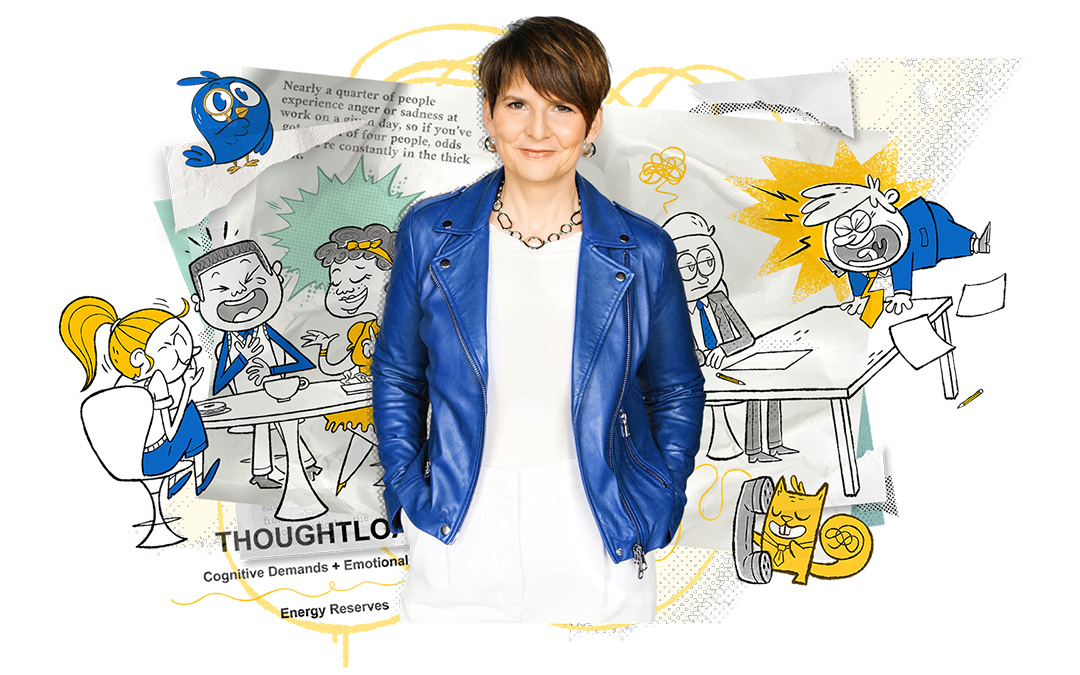
Most of us aren’t just carrying a heavy workload; we’re carrying a heavy thoughtload—the combination of cognitive demands, emotional burdens, and depleted energy that makes it a struggle to be productive, even on days when our calendar doesn’t look that bad.
To help people get a clearer picture of what’s weighing them down, I’ve created a quick assessment that helps you see:
- How heavy your thoughtload is right now.
- Whether your biggest constraint is attention, emotion, or energy.
- Where to focus if you want to feel less underwater.
Your responses will feed directly into the tools and resources I’m building around the book to help people manage their own thoughtload more effectively.
▸ Take the Thoughtload Audit here: https://lianedavey.com/thoughtload-quiz/
With you in the deep end,
— Liane