
Emotional Burdens

Emotional Burdens
Your biggest thoughtload factor is emotional — the drama you’re absorbing, managing, and maybe even suppressing.
What's going on
It’s not just the work that’s wearing you down. It’s the feelings about the work. The anxiety before the hard conversation. The frustration that sticks with you long after the meeting ends. The low-grade worry that you let someone down, said the wrong thing, or dropped a ball you didn’t even know you were holding.
Emotions are data. They’re telling you something important. But when you never get a chance to process them — when you just absorb them, suppress them, and keep moving — they pile up. And a high emotional thoughtload is exhausting in a way that no amount of sleep quite fixes.
What's causing it
You were already dealing with your own emotional weather before you walked into the office. Add to that a team full of people who are stressed, and all the feedback that’s coming at you. Add conflict — often unaddressed, quietly festering. Not to mention the background hum of a world that seems to be in a permanent state of crisis.
When you’re matrixed into multiple teams, you’re not just managing your own emotional load — you’re navigating everyone else’s too. You’re absorbing your team’s frustration, rebuilding trust that the remote environment has eroded, and trying to influence without authority in a structure that wasn’t designed to make that easy.
And here’s the part most people don’t say out loud: when it gets the better of you — when you snap, or shut down, or say something you regret — the emotional load gets heavier, because now you’re beating yourself up about it too. Feeling upset about getting upset is a torturous loop. But that’s where many of us are.
What you can do about it
Emotional overwhelm doesn’t get better by pushing through it. It gets better by processing it.
Learn to interrupt your feelings. Don’t suppress them, but catch them early, before they’re running the show. Emotions are data. Get curious about what they’re telling you before you react.
Know what matters to you and what makes you feel threatened. Most emotional reactions are protecting something important. When you understand what’s at stake for you, you get more access to options — and are less likely to get upset at the wrong moment.
Practice being vulnerable and accountable. These aren’t opposites. Admitting that you’re struggling — while also taking responsibility for how you show up — builds trust and takes the pressure off both you and the people around you.
Support others without absorbing them. You can be present, empathetic, and genuinely helpful without taking on everyone else’s emotional state as your own. That’s a skill. And it’s learnable.
The emotional weight you're carrying is real.
Learn what’s triggering you and stop absorbing everyone else’s chaos as your own.
Sign up below to get tools and strategies specifically built for your high emotional burdens, delivered straight to your inbox.

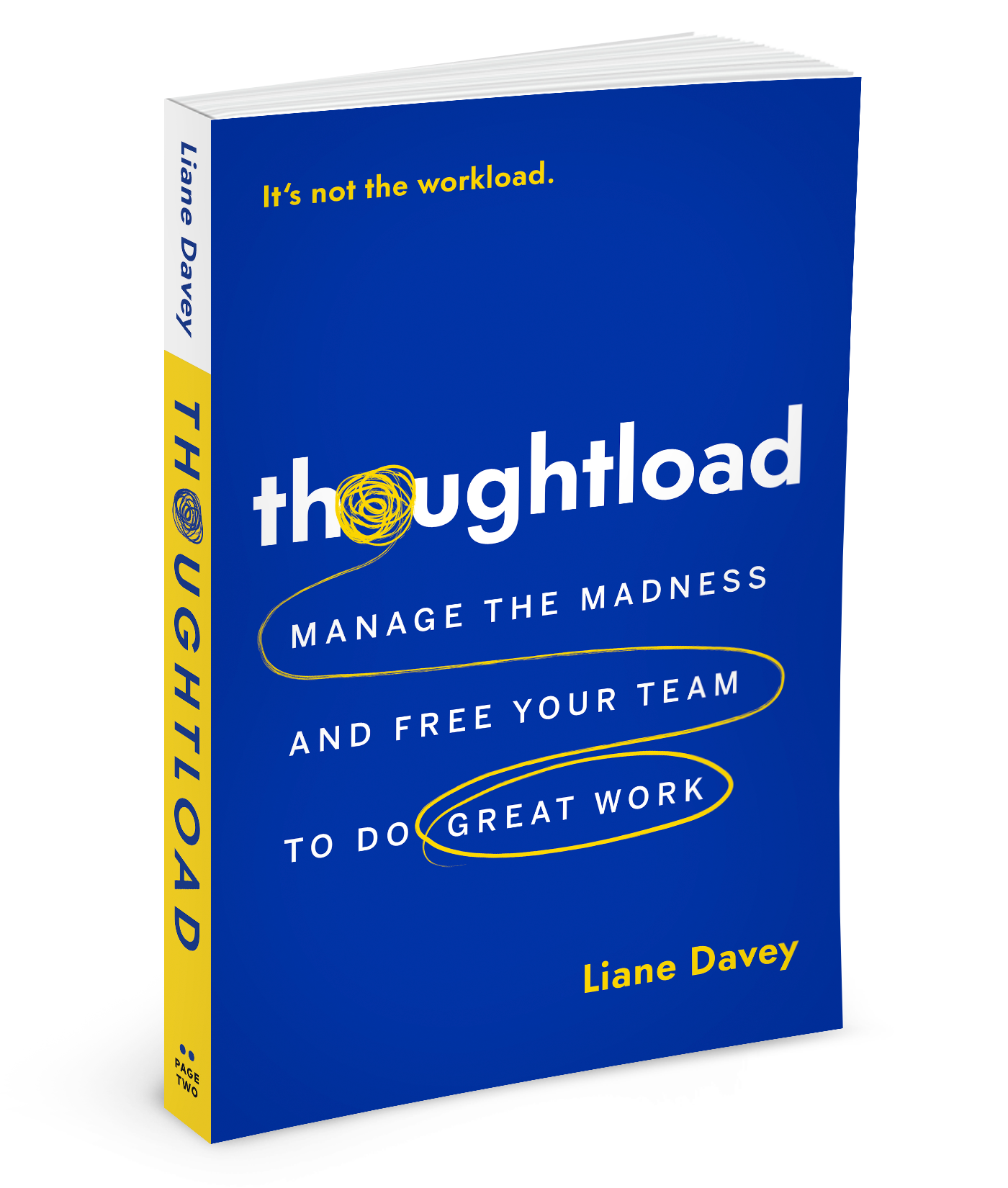
About Thoughtload
Team leaders are facing an incredible challenge. You want your people to perform, produce, and prosper — but it feels like they’re too distracted, triggered, and burned out to deliver. It’s easy to conclude that the workload is too much, but the numbers don’t support the idea that we’re actually getting much done.
The problem isn’t the workload. It’s the thoughtload: the weight of everything people are trying to pay attention to, plus all the emotional baggage they’re carrying, divided by their increasingly depleted energy reserves. In Thoughtload, I give you the frameworks to focus attention, reduce anxiety, and conserve energy — for yourself and your team.
Publishes May 19, 2026.
Available for pre-order¹ at:





Interested in buying copies for a large group?
Email me to learn about special bulk offers and promotions.